Bread has a reputation problem with anyone who tracks protein. You either get a beautiful crust with a soft crumb and barely 3 grams of protein per slice, or you get a “protein bread” that eats like a yoga mat. Cottage cheese bread sits in a rare middle. When you get the ratios right, you can pull a loaf from the oven that lifts like a cloud, slices cleanly, and carries 10 to 14 grams of protein per slice, depending on thickness. It doesn’t pretend to be a baguette, and it doesn’t need to. This is a different animal, more tender than chewy, more custard than crumb, and genuinely useful if you’re aiming for a higher protein breakfast or sandwich without the chalky taste that plagues spikes of whey or soy.
The basic idea is simple: cottage cheese replaces a large chunk of the liquid and fat in the dough, contributes casein for structure, and, once blended, becomes a silky base that bakes into a pillowy interior. The practical wrinkle is moisture. Cottage cheese varies wildly by brand, fat percentage, and curd style, and those differences show up in the bake. If you’ve tried a cottage cheese loaf and it collapsed or turned rubbery, you probably fought hidden water or overmixed your eggs. The good news is you can control both.
What makes it cloud-like
Traditional breads build structure with gluten, a network of proteins that trap gas from yeast fermentation. Cottage cheese bread, at least the version that earns the “cloud” nickname, uses eggs and dairy proteins to create a custard-leaning matrix that rises from steam and leavening rather than long fermentation. Think of it as a bread-custard hybrid that leans savory and slices like a sandwich loaf once cooled. It will not spring like a sourdough boule, and it shouldn’t. The goal is an even, micro-bubbled interior that feels buoyant, not spongy.
The cloud character comes from three things working in sync. First, the cottage cheese, fully blended, emulsifies, which stabilizes air bubbles during mixing and early baking. Second, egg whites, either whipped or simply beaten, bring lift and set the crumb as they coagulate. Third, a measured amount of starch and baking powder prevent the loaf from curdling into a frittata by giving the structure enough carbohydrate to hold water and resist collapse. Get the ratio off, and you swing from omelet to brick. Get it right, and you can press a finger into the cooled loaf and feel it spring back.
The baseline formula that actually works
I’ll give you a base formula that has survived multiple ovens, brands, and a few disasters in shared rental kitchens. It is reliable, not precious, and it scales cleanly.
For one standard 8.5 x 4.5 inch loaf pan, you want about 900 to 950 grams of batter. Here is the target by weight, which is the easiest way to stay honest:
- 450 g cottage cheese, blended smooth (see note on types below) 200 g egg whites, plus 2 large whole eggs (about 100 g) 70 g neutral oil or melted butter 120 g fine oat flour or white rice flour, or 100 g all-purpose flour 20 g whey isolate or skim milk powder (optional but helpful) 10 g baking powder 6 g fine salt 10 to 20 g sugar or honey (optional, balances dairy tang and helps browning)
If you do not weigh, measure with care: roughly 2 cups cottage cheese (blended), 1 cup liquid egg whites, 2 eggs, 5 tablespoons oil, 1 cup flour, 2 teaspoons baking powder, 1 teaspoon salt, 1 tablespoon sugar. The weights will treat you better, particularly if your cottage cheese runs wet.
A word on flour choice. Oat flour gives a tender crumb with a gentle sweetness and plays well with dairy proteins. White rice flour stays neutral and light, but it can go slightly crumbly if the loaf is underbaked. All-purpose flour will make the loaf more bread-like, with a bit more chew and more tolerance for handling. If you want gluten-free, use oat or rice; if you want a touch more structure and don’t mind gluten, use all-purpose.
The whey isolate or skim milk powder is optional, but it moves the texture from soft to sliceable and adds 3 to 5 grams of protein per slice. It also browns the crust more readily. Skip it if you are sensitive to the slight dairy note that can come through at higher percentages.
Know your cottage cheese
Not all cottage cheese behaves the same. Full-fat (4 percent milkfat) has a smoother, richer result and slightly less water, which makes the loaf more forgiving. Low-fat versions add water and can be overly tangy. Dry curd cottage cheese exists in some markets, and it will make the loaf too dry unless you add extra liquid. If you only have a very loose, watery brand, drain it briefly. Five to ten minutes in a mesh strainer is enough. You don’t want it dry, just not sloshing.
Curd size doesn’t matter once you blend, but it matters before you do. Blend until completely smooth. A small immersion blender cup is perfect. You’re looking for a pourable, glossy mixture with no curds visible, like a thin Greek yogurt.
Mixing technique, without the fluff
You can whip egg whites into soft peaks to maximize loft. You can also win without a separate whipping step, as long as you blend, beat gently, and bake promptly. Here is the simplest route that still respects structure:
- Preheat the oven to 350 F, 175 C. Line your loaf pan with parchment, with a little overhang for easy removal. Blend the cottage cheese until smooth. Beat the eggs and egg whites in a large bowl until frothy, about 30 seconds, then whisk in the cottage cheese and oil until fully combined. In a second bowl, whisk the dry ingredients to break up any clumps. Add the dry mix to the wet in two additions, whisking until just smooth. It should be the consistency of a loose pancake batter, not a bread dough. If it feels runny like milk, add a tablespoon or two more flour and whisk again. Rest the batter for five minutes. This lets the starch hydrate and reduces tunneling. Pour into the prepared pan, smooth the top lightly, and bake on the center rack for 45 to 60 minutes. At 45, check. The loaf is done when the top domes, the center feels set, and a skewer comes out with moist crumbs, not batter. An instant-read thermometer will read 195 to 205 F in the center.
Let it cool in the pan for 10 minutes, then lift out and cool fully on a rack. This is not optional. If you slice it hot, steam will escape and the crumb will gum.
Where people get burned
Two failure modes dominate. The first is deflation. You pull a giant, proud loaf from the oven, it looks like victory, then it slumps to half-height. That’s usually a sign of underbaking or excess moisture. Remember, this loaf rides steam and egg proteins. If the center hasn’t set past 190 F, it won’t hold. Bake longer, tent with foil if the top browns too fast. If you used a very wet brand of cottage cheese and watery egg whites from a carton, give the batter two more tablespoons of flour next time.
The second failure is rubbery texture. Overmixing and too much whey isolate can do this, as can high oven heat. Use a moderate oven and stop whisking once smooth. If you’ve ever made a tough pancake, it’s the same idea, just more expensive to learn on.
There’s a quieter third failure too, and it shows up the next day. The loaf slices ragged and crumbs everywhere. That usually means either you used rice flour and underbaked, or you sliced it warm. Chill the loaf for 30 minutes, then slice. If the knife still drags, switch to a serrated knife and a gentle sawing motion.
The protein math, honest and transparent
Protein claims get inflated fast. With the base formula above, the numbers are steady if you use either oat flour or all-purpose flour. Assume full-fat cottage cheese at around 12 percent protein by weight. For 450 g, that’s about 54 g protein. Egg whites contribute roughly 10 g per 100 g, so 200 g gives about 20 g. Two whole eggs add another 12 g. The optional 20 g whey isolate adds around 18 g protein. Add small contributions from flour, and you land in the neighborhood of 110 to 120 g total protein per loaf when using whey, a little less without it. Twelve slices means 9 to 10 g per slice without whey, 10 to 14 g with whey, depending on slice thickness. That’s real protein, not marketing noise.
If you want it more bread-like
Some readers want closer to a classic sandwich texture. You can shift the formula toward that direction without giving up the soft lift. Replace the oat or rice flour with 150 g all-purpose flour, reduce egg whites from 200 g to 150 g, and add 5 g instant yeast plus 10 g sugar. Now you have a hybrid. Mix as before, rest the batter 15 minutes to let the flour hydrate, then bake. It will rise less in the oven, but the crumb will chew a bit more and toast beautifully. Protein per slice goes down slightly because you’ve traded egg whites for flour, but still lives above a typical loaf.
This is a good time to say “it depends.” If your goal is a grilled cheese that tastes like grilled cheese, give yourself the extra structure. If your goal is a breakfast slice with peanut butter that disappears in three bites, stay with the cloud.
Flavor matters more than additives
Cottage cheese carries a mild tang that reads “dairy” more than “cheese.” The loaf takes seasoning well. Salt is non-negotiable. A small amount of sugar rounds the edges and helps browning. From there, consider your use case. For a savory loaf, a teaspoon of onion powder and a pinch of white pepper will make people wonder why it tastes better without pinning it down. For breakfast, a couple teaspoons of vanilla and an extra tablespoon of sugar makes it more brioche-adjacent without turning it into cake. Cinnamon is pleasant but can push it toward quick bread territory. Your call.
Cheese in the loaf is tempting, and it works, but it’s also a collapse risk if you add too much. Grate 30 to 40 g of sharp cheddar or Parmesan and fold it in at the end for a cheese-scented loaf that still stands tall. More than 60 g and you will need to increase flour or bake longer.
Seeds look nice but need care. Sesame or poppy work fine scattered on top. Sunflower or pumpkin seeds mixed into the batter will sink and create wet pockets unless you coat them in a little flour first. I usually skip mix-ins and use spreads to carry variety.
A real kitchen scenario
A client preps breakfasts on Sundays and wants a high protein base that her two kids will eat without complaint. She tried a different “protein bread” with whey as the main driver and hated the squeaky bite. The plan here was cottage cheese bread, split into two flavor profiles. One loaf stayed savory for egg sandwiches, the other leaned lightly sweet with vanilla for quick breakfasts. She used a very wet, low-fat cottage cheese brand and carton egg whites. The first attempt mushroomed then collapsed.
We fixed it with three changes. First, she blended the cottage cheese, then strained it for five minutes. Second, we weighed the liquids and added 10 g more flour. Third, she baked five degrees lower in a convection oven and went to an internal temperature of 200 F. The next loaf stood, sliced well on day two, and took to toasting without drying out. She spread one slice with pesto and turkey, another with almond butter and sliced strawberries. Both were gone before Wednesday. The kids didn’t know or care about protein, which was exactly the point.
Texture control, from custard-soft to slice-and-stack
You have three levers: eggs, flour type, and bake time.
- More egg whites, less whole egg means lighter but more fragile. Whole eggs bring fat, which softens and stabilizes. If your loaf is too airy and collapses, swap 50 g of whites for one more whole egg. Oat flour is your middle ground. Rice flour is lighter but can go crumbly if you underbake. All-purpose flour boosts chew and slice durability. You can mix them. A favorite split is 80 g oat flour plus 40 g all-purpose flour, a nice balance when you want sandwiches. Bake longer than you think, at a steady temperature. Color is misleading because dairy browns fast. I rarely pull a loaf earlier than 50 minutes in a standard pan, and often go 60. If the top threatens to overbrown, tent loosely with foil at the 40 minute mark.
A note on pans. Dark pans brown faster and can overbake the edges while the center is setting. Light aluminum or a glass loaf pan gives a more even bake. If you only have a dark pan, reduce the oven by 10 F and watch the last 10 minutes.
Storage and slicing without drama
High moisture means you need to respect storage. Once fully cool, wrap the loaf tightly or store in an airtight container. At room temperature, it’s fine for 24 hours. Beyond that, refrigerate up to five days. It toasts up beautifully from the fridge. For longer storage, slice, lay flat on a sheet to freeze, then bag. You can pull single slices straight to toaster or skillet.
Slice thickness matters. For delicate sandwiches, go slightly thicker than a standard store-bought slice, around 1.5 cm. If you go thinner, it may tear under spreads. A serrated knife and a gentle hand keep the crumb intact. This loaf rewards patience after baking, but it’s not fussy once cold.
Variations that keep the promise
A few variations have earned repeat status, mostly because they respect the base structure.
- Herb and garlic: add 1 teaspoon garlic powder, 1 teaspoon onion powder, 1 tablespoon finely chopped chives or parsley. Good with eggs, turkey, or grilled vegetables. Maple vanilla: 15 g maple syrup instead of sugar, 2 teaspoons vanilla, a whisper of nutmeg. French toast with this is quietly excellent. Seeded top: brush the batter surface lightly with milk and scatter a tablespoon of sesame seeds. It looks bakery-made and adds a little crunch. Cheddar jalapeño: 40 g sharp cheddar grated and 1 small jalapeño, minced and blotted dry. Bake on the longer side and tent if needed. Whole grain tilt: swap 30 g of the flour for fine buckwheat flour. It goes darker and has a nutty edge that plays well with savory toppings.
Keep the total dry additions modest, and bake to temperature, not just time. If you push add-ins, give yourself a 5 to 10 minute buffer in the oven.
Troubleshooting chart, in plain language
- Loaf collapses after cooling: underbaked center or too much moisture. Bake to 200 F internal. Drain cottage cheese briefly next time or add 10 to 20 g flour. Rubbery, squeaky bite: overmixed or too much whey. Mix until just smooth, reduce isolate to 10 g or skip it, reduce oven to 340 F and extend bake. Pale top, gummy center: oven running cool or pan too small. Verify temperature with a thermometer, extend bake by 10 minutes, tent if needed. Crumbly slices on day two: underbaked with rice flour or sliced warm. Bake to temp, cool fully, chill 30 minutes before slicing.
These are the patterns, not the edge cases. If yours behaves oddly in a new way, start with moisture and bake time. Almost everything resolves there.
Using it in the real world
The loaf shines where you need a soft, high-protein base that stays out of the way. Breakfast is the obvious move. A slice with peanut butter or ricotta and fruit feels like you smuggled a protein shake into toast. For savory use, it’s a friendlier partner to eggs than a heavy sourdough, and it takes well to pan-searing. A small amount of butter in a skillet and two minutes per side gives you a golden surface that holds up to a yolky egg.
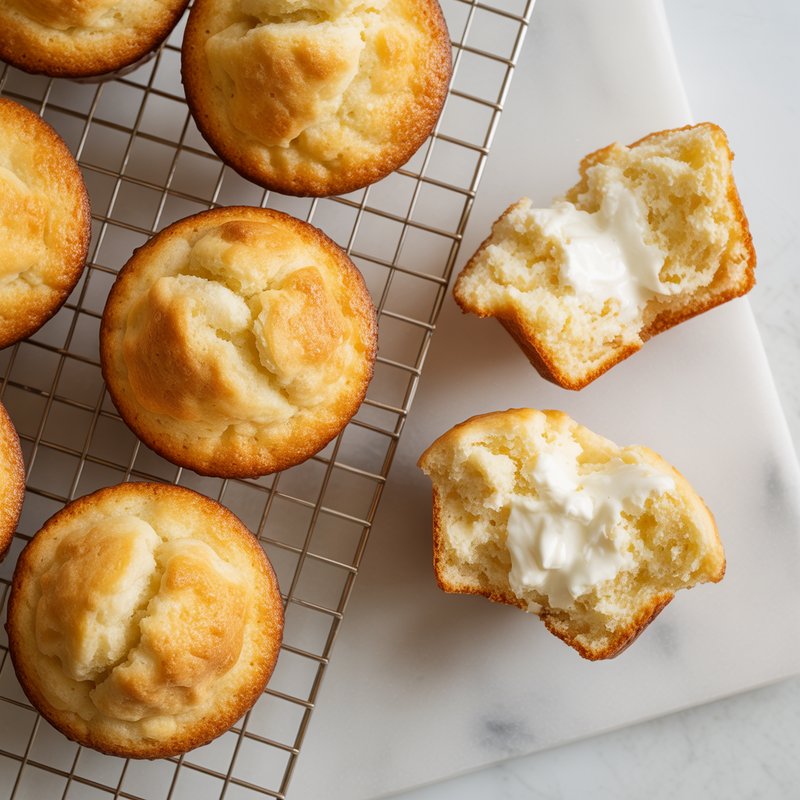
Sandwiches are fine as long as you respect moisture. Wet fillings will push through a delicate crumb. Layer lettuce or a thin swipe of butter to create a moisture barrier if you use tomatoes or pickles. Wrap tightly if taking it on the go, or keep fillings separate until you eat. It sounds fussy, but it’s the difference between a clean bite and a soggy regret.
If you like to count, a breakfast sandwich with two eggs and this bread lands in the 30 to 40 gram protein range without leaning on deli meat. That won’t fix everything about your day, but it solves a breakfast problem many people have without tasting like compromise.
Why this is worth learning once
You can buy packaged high-protein breads and save time, and there’s a place for that. The tradeoffs are texture, price, and additives. Making this loaf takes under 15 minutes of hands-on time and around an hour in the oven. The ingredient list is short and flexible. More than anything, you gain control. If you need lactose low, choose lactose-free cottage cheese. If you want gluten-free, go oat or rice flour. If your week leans savory, season it that way. You are not managing a starter or kneading for https://proteinpancakes.co/ windows. You’re blending, whisking, and waiting. It’s approachable, even on a weeknight.
And the cloud texture is not a gimmick. When you nail it, it feels improbable, like a soufflé that decided to behave after cooling. You will cut a slice that looks too light to hold a burger, and then it does.
For the data-minded baker, a quick process control loop
If you want repeatable results, change one thing at a time and keep notes. Record cottage cheese brand and fat percentage, egg type (carton whites behave slightly differently from separated eggs), flour choice, and bake time plus internal temperature. If your loaf domes then caves, flag moisture. If your crumb feels too custardy, flag bake time. Two or three runs, and you will have your house formula.
I’ve run this loaf in gas, electric, and convection ovens at altitudes from sea level to roughly 1,500 meters. At higher altitude, reduce baking powder to 7 g and keep the oven at 350 F. The batter will look the same, but the rise will be more even, and the crumb less prone to tunneling. If you do not bake at altitude, ignore this and keep living your life.
A final nudge toward action
If you’re on the fence because you tried a “cloud bread” recipe years ago that ate like a meringue pillow, set that memory aside. This is sturdier, more useful, and tastes like food, not foam. Blend the cottage cheese, respect the moisture, bake to temperature, and give it time to cool. The rest is yours to customize.
Here is a lean, practical version to start with if you want a one-glance plan:
- Preheat to 350 F, line an 8.5 x 4.5 inch pan. Blend 450 g cottage cheese smooth. Whisk 200 g egg whites and 2 whole eggs until frothy. Add 70 g oil. In a bowl, whisk 120 g oat or all-purpose flour, 10 g baking powder, 6 g salt, 10 to 20 g sugar, and 20 g whey isolate if using. Combine wet and dry until just smooth. Rest 5 minutes. Pour, smooth, bake 50 to 60 minutes to 200 F internal. Cool, then slice.
Once you taste the first properly cooled slice, you’ll understand why this formula has a quiet, loyal following. It’s not here to compete with your weekend sourdough. It fills a different slot, the Tuesday morning slot, the post-workout sandwich, the I-need-something-quick-that-isn’t-empty-calories slot. And it earns that place with a clean, cloud-like bite that supports more than its weight suggests.